
Billund, Denmark / UK — LEGO has finally opened pre-orders for its highly anticipated first ever official LEGO Pokémon™ sets — something I flagged in a YouTube Short back in mid-2025 — and while fans are thrilled to see iconic characters like Pikachu, Eevee, Venusaur, Charizard and Blastoise in brick form, it’s the jaw-dropping price of the flagship model that’s dominating conversations across the LEGO community.
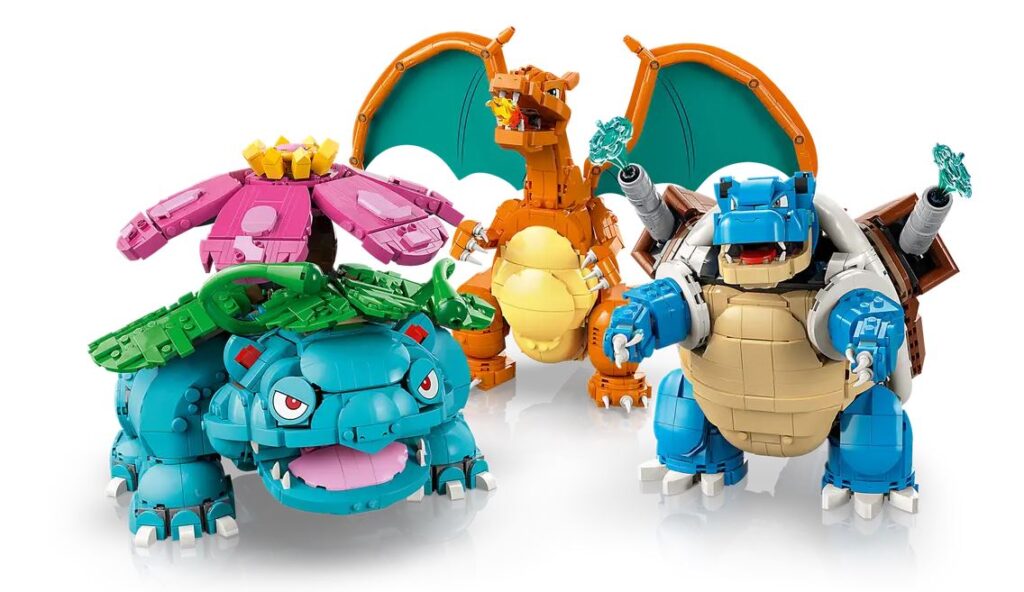
After years of speculation, official LEGO Pokémon sets are now available to pre-order from LEGO’s online shop in the UK and globally. The initial wave, launching from 27 February 2026, includes three main sets ranging from a relatively modest £54.99 to one of LEGO’s most expensive licensed builds in recent memory.
From Cute to Colossal: The Price Spread
The spread of pricing across LEGO’s new Pokémon theme is an unusual — and telling — strategic choice. Historically, LEGO tends to introduce new themes with relatively modestly priced sets, gradually building toward a flagship release once demand and audience appetite are established.
There are, of course, exceptions. The LEGO Stranger Things line, for example, launched with The Upside Down during its initial phase. However, even that early flagship set carried a price tag of £179.99 — not one approaching three times that amount.
What’s striking here is that LEGO has bypassed the traditional ramp-up entirely. Instead, the Pokémon line launches immediately with a set priced in the same territory as some of the earliest Star Wars Ultimate Collector Series releases — a level typically reserved for long-established, proven collector themes.
That decision alone signals LEGO’s confidence not just in Pokémon as a brand, but in its ability to perform as a premium, adult-focused collectible from day one — targeting buyers with overlapping interests in LEGO and Pokémon, and the willingness to commit nearly £600 to a single set.
The First Three LEGO Pokémon Sets
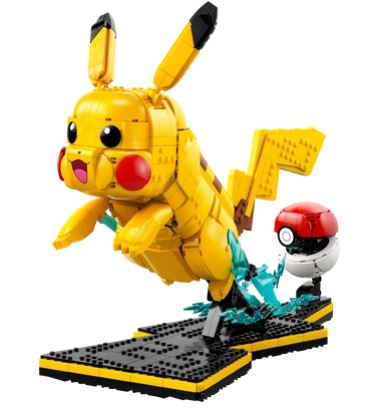
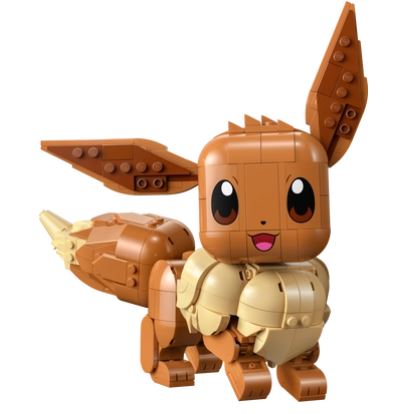
- Eevee (72151) — A 587-piece buildable figure priced at £54.99, aimed at adult builders and Pokémon fans with limited shelf space.
- Pikachu and Poké Ball (72152) — A 2,050-piece detailed display celebrating the franchise mascot, priced at £179.99.
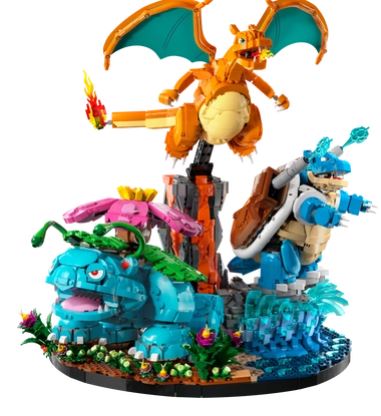
- Venusaur, Charizard and Blastoise (72153) — The headline grabber: a 6,838-piece, multi-biome diorama featuring three fully evolved starter Pokémon — £579.99 in the UK, or roughly $649.99 USD.
At £579.99, LEGO’s biggest Pokémon set instantly becomes one of the most expensive licensed builds ever released.
That’s more than many UCS Star Wars sets — and significantly higher than most licensed LEGO launches.
That top-tier set dwarfs the others not only in piece count but in price, placing it in the same league as LEGO’s premium collector offerings like UCS Star Wars and modular architectural builds. It also makes it one of the most expensive LEGO sets ever sold outside those flagship collector lines — an achievement few saw coming from a licensed launch.
At nearly £600, LEGO hasn’t just launched Pokémon — it’s tested how far fans are willing to follow the brand into premium collector territory.
Fan Reaction: Excitement Tempered by Sticker Shock
Early community reaction reflects that same mix of excitement and disbelief, particularly among fans on Reddit. While many have praised the Venusaur, Charizard and Blastoise set as an impressive centrepiece — and arguably the strongest build in the initial Pokémon lineup — the price has emerged as the dominant point of debate.
A recurring concern is whether a near-£600 price tag can be justified, especially given that the three starter Pokémon are bundled together rather than offered as individual sets. Some have questioned how much of the cost is driven by the large shared display base rather than the figures themselves, while others feel the set pushes beyond what even adult collectors would typically consider reasonable.
Taken together, the reaction suggests strong interest in the concept, but lingering uncertainty over whether LEGO has tested the upper limits of what fans are willing to pay for this type of display piece — even for a flagship Pokémon release.
Why the High Price? Scalpers, Scarcity & Fan Demand
Part of the buzz around this launch isn’t just LEGO’s pricing strategy — it’s how the market has already reacted. Early pre-orders for the biggest set reportedly sold out quickly, with resellers listing examples for significantly above the original retail price on secondary markets to try and take advantage of the scarcity likely to be seen during release, and the expected demand from Pokemon fans. Some listings have pushed past £1,000, nearly double the RRP, highlighting intense demand among collectors and speculators alike. Whilst we’ve seen sets like the Stranger Things Creel house sell for “overs” during it’s release, I don’t see how buyers would want to pay in excess of the £580 price tag on release for this set.
This isn’t totally unprecedented — spectacular LEGO sets often fetch premium resale prices — but seeing it happen before official release underscores the hype and limited availability surrounding this collaboration.
Gift-With-Purchase Controversy: A Missed Bonus or a Bigger Problem?
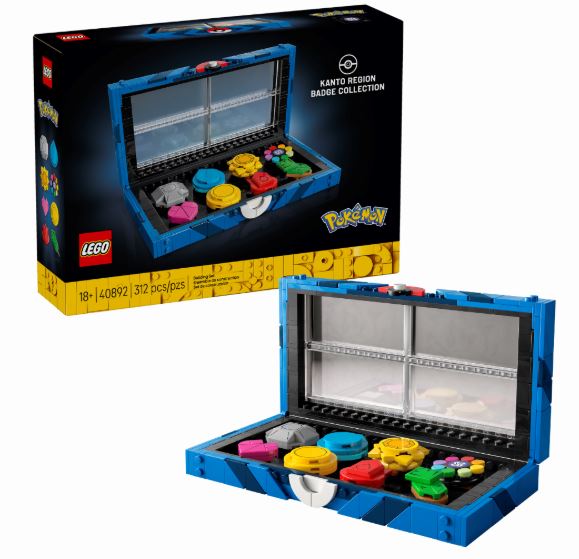
Another flashpoint in the LEGO Pokémon launch has been the handling of the 40892 Kanto Region Badge Collection gift with purchase (GWP) tied to the £579.99 Venusaur, Charizard and Blastoise set. LEGO initially offered the badge set free with pre-orders of the flagship build, but it sold out exceptionally quickly, leaving many early buyers without the bonus — and others unable to secure it even before the main set itself sold out.
Critics argue the situation highlights a broader frustration with LEGO’s approach to GWPs, particularly when they’re tied to expensive sets. Because the badge collection was only available with pre-orders of the large set and in very limited numbers, some feel it exacerbates the sense that LEGO is leveraging scarcity and exclusivity rather than generosity. There is also concern that scalpers will acquire both the set and the GWP to resell separately at inflated prices, adding another layer of frustration for genuine fans. This is just the situation we saw recently with the Stranger Things Creel House and Radio set release earlier this month.
While LEGO has indicated the badge collection will be offered again on release day for the 72153 set, the initial scarcity has left a sour note for many — especially given the flagship set’s already high price tag. At the time of writing, sealed examples of the GWP are already appearing on the aftermarket for around £140 in the UK, of course, these listings are for pre-orders only.
From Trading Cards to Display Bricks: Pokémon’s Proven Collector Economy
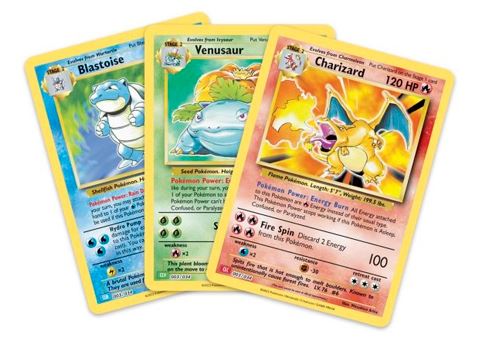
Part of what makes LEGO’s aggressive pricing less surprising is Pokémon’s long-established position as a serious collectible brand. For decades, Pokémon trading cards have operated far beyond the world of children’s toys, with rare cards routinely selling for thousands — and in some cases millions — of pounds.
Sealed Pokémon card products are now actively traded by adult collectors, investors and long-term speculators, with first-edition, graded cards often treated more like alternative assets than nostalgia items. That culture of scarcity, condition and long-term value has shaped how Pokémon is perceived — not just as a game or franchise, but as a premium collectible ecosystem.
Seen through that lens, LEGO’s decision to launch Pokémon at the high end begins to make more sense. Rather than positioning these sets as mass-market playthings, LEGO appears to be targeting the same adult fanbase that already understands — and accepts — premium pricing in the Pokémon world.
In many ways, this mirrors what LEGO itself has become over the past decade. Adult collectors now treat certain LEGO sets much like sealed Pokémon card boxes: buying at launch, displaying or storing long-term, and watching aftermarket values closely once sets retire. Pokémon, with its deep-rooted collector mentality, may be uniquely suited to this model — perhaps more so than almost any other licensed theme LEGO has tackled.
A Milestone for LEGO & Pokémon Fans — But Maybe Not for Younger Builders
From a cultural standpoint, LEGO’s Pokémon partnership is huge. Official brick versions of these universally loved characters bridge two of the biggest fandoms in the world and arrive as part of Pokémon’s 30th anniversary celebrations, making 2026 a landmark year for both brands.

But the price barrier raises questions about accessibility. While the Eevee set offers a low-entry point, the flagship model may be out of reach for many younger fans — especially when compared with traditional Pokémon toys and previous LEGO sets aimed more squarely at children.
What’s Next?
For now, LEGO Pokémon pre-orders are live — and the debate has moved well beyond piece counts and minifigures. With Pokémon’s long history as a high-value collectible brand, LEGO’s premium pricing may be less shocking than it first appears.
The real question isn’t whether LEGO Pokémon is expensive — it’s whether this launch marks the beginning of a new era where LEGO treats major licensed themes less like toys, and more like long-term collectibles.